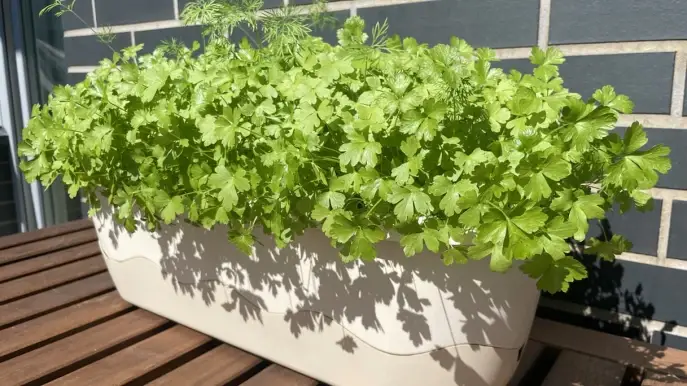
A small outdoor space is all you need to cultivate parsley in pots and always have this fragrant herb within easy reach.
With its vibrant bright green hue, parsley holds a special place among the aromatic herbs of Mediterranean cuisine. This herb not only imparts a distinctive flavor to dishes but also offers various health benefits. For instance, it contains essential oils that stimulate gastric juice secretion, aiding digestion, making it a valuable ally in numerous situations. Why not cultivate it on your balcony? Let’s explore how to grow parsley in pots, ensuring you have a fresh and locally sourced supply.
Characteristics of Parsley:
Parsley, scientifically known as Petroselinum crispum, is a biennial plant belonging to the Apiaceae family, which includes other culinary staples like cumin, carrot, celery, parsnip, and fennel. Indigenous to Mediterranean regions, parsley thrives in woods and meadows, showcasing a robust root system, triangular leaves with serrated edges, and small umbels of white or slightly blue flowers. Growing parsley is relatively undemanding, provided certain precautions are taken. It is sensitive to both intense cold and heat, flourishing in temperate climates, making it ideal for regions with mild winters.
The optimal location for planting parsley is in a cool area sheltered from direct sunlight, especially during the summer. In regions with shorter, milder winters, parsley can be moved indoors when temperatures drop. If left outdoors, mulch the soil with dry leaves or straw to shield the roots from low temperatures.
How to plant parsley:
For those with a balcony or small terrace, cultivating parsley in pots is a convenient option, as this adaptable plant thrives in limited spaces. Here’s a step-by-step guide on planting parsley:
- Select an Adequate Pot: Choose a pot with a minimum diameter of 20 cm, ensuring it accommodates the parsley roots, which grow deep and require ample space.
- Prepare the Soil: Parsley is not overly demanding when it comes to soil. Utilize horticultural soil mixed with a bit of sand. Enhance drainage by placing a layer of expanded clay at the pot’s bottom to prevent water stagnation.
- Sowing Parsley Seeds: Sow parsley seeds on the surface of the soil, ensuring even distribution. Cover them with a thin layer of soil, moisten it, and place the pot in sunlight. Alternatively, accelerate germination by pre-germinating seeds indoors using methods like cotton wool or absorbent paper.
- Transplanting Mature Plants: Another option is purchasing a grown parsley plant and transplanting it into your pot. This should be done when temperatures consistently remain above 15°C, generally from spring to late autumn.
Tricks for Growing Parsley in Pots:
Caring for a parsley plant is straightforward, offering rewarding results within a few weeks of sowing. Follow these tips for optimal growth:
- Thinning Out: When the plant reaches 5 cm in height, thin it out by pruning smaller branches, allowing better-developed ones to receive more light, air, and nutrients.
- Regular Pruning: Periodically prune weaker or diseased twigs to strengthen the remaining ones.
- Watering: Parsley requires water but avoid overdoing it. Water before the soil becomes completely dry to prevent seedling burn, especially in summer. Be cautious of excessive water to prevent root stagnation, indicated by yellowing parsley leaves.
- Harvesting: Harvest when the plant reaches 15-20 cm in height. For a few leaves, use scissors; for larger quantities, cut a tuft of stems, leaving a few centimeters above the base for regeneration.
With these simple steps and care tips, you can enjoy a bountiful and fragrant parsley supply right at your fingertips.