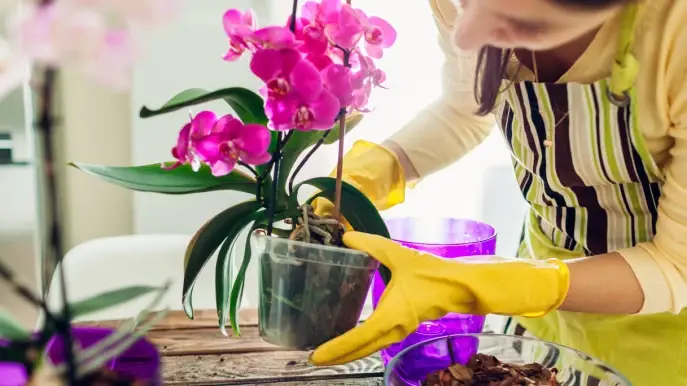
Gentle and exquisite, orchids demand meticulous care. Proper watering is crucial, striking a balance between too much and too little.
Careful nurturing ensures not only consistent blooming but also the overall health of the plant. Discover effective techniques and tips to effortlessly enjoy beautiful orchids.
Milk Treatment for Orchids:
Surprisingly, milk plays a role in orchid care, particularly in maintaining the cleanliness and health of the leaves. Creating a simple solution involves mixing a spoonful of water with a spoonful of milk. Gently apply the mixture to the orchid leaves using a cotton ball or makeup remover pad. This aids in removing dust and eliminating limescale residues that may accumulate on the plant. Excessive water can lead to leaf problems and encourage fungal infections. The milk treatment helps cleanse the leaves, promoting their health and providing a polished appearance.
Correct Watering Techniques:
Precise watering is paramount for orchids, especially considering they do not grow in traditional soil. Their mixture of peat, bark, and inert materials requires a careful approach. Orchids should not be watered from above; instead, submerge the pot gently in a sink or basin filled with water, ensuring the liquid level does not exceed half the jar. Avoid letting the bark escape during immersion. Optimal duration is around 20 minutes, allowing the peat to soak without risking water stagnation. Drain well for about half an hour before placing the jar back on its saucer.
Watering frequency varies with seasons and temperature trends. In spring, once a week may suffice, increasing to two or three times a week in the heat of summer. Return to weekly watering in fall and extend to every 10 days during winter. Signs of water inadequacy include dry substrate and silver-toned roots, indicating thirst.
Choosing the Right Water:
Selecting appropriate water is crucial for orchid care. Orchids dislike hard water and chlorine, making tap water unsuitable. Rainwater or demineralized water, the same used in steam irons, is preferable. Rainwater can also be used to mist the leaves delicately. If only tap water is available, let it settle to allow limestone to settle at the bottom. Ensure the water temperature is not too cold, as orchids begin losing flowers at 15°C. Room temperature water is ideal, and in winter, it can be warmed for a few seconds in a microwave.
Leaf Nebulization:
Given the dry air in our homes, particularly when heated or cooled, maintaining humidity around orchids is essential. Nebulizing the leaves is crucial for orchids to thrive. Perform this procedure throughout the year, taking care to avoid misting the flowers. If the environment is exceptionally dry, consider using an environmental humidifier. Unlike other houseplants, nebulizing orchid leaves is best done in the early morning when the sun’s heat can evaporate excess water, preventing spore development.
Adapting Irrigation to Soil Composition:
Effective orchid watering depends on the potting soil composition. For soil with bark and sphagnum moss, traditional watering can be applied if the pot drains before placing it on its saucer. With bark-only cultivation, follow the suggested watering methods and moisten the leaves gently with a spray bottle, ensuring excess water is dried.
Fertilizer and flowering:
Orchids require consistent fertilization for proper growth and abundant, long-lasting flowering. Selecting the right fertilizer is crucial, considering various formulations suitable for different Orchidaceae varieties. Follow the instructions on the label or seek advice from a reliable retailer. Fertilize the plant throughout the year. Flowering occurs twice a year, in spring and autumn, lasting for many months. Once the last flower has fallen, decide whether to keep the stems for smaller blooms or cut them for the development of new stems and offspring in the new season. Remember to keep flowers dry during this process.