How to thwart peach leaf curl? Can it be remedied once it takes hold? Let’s delve into these inquiries.
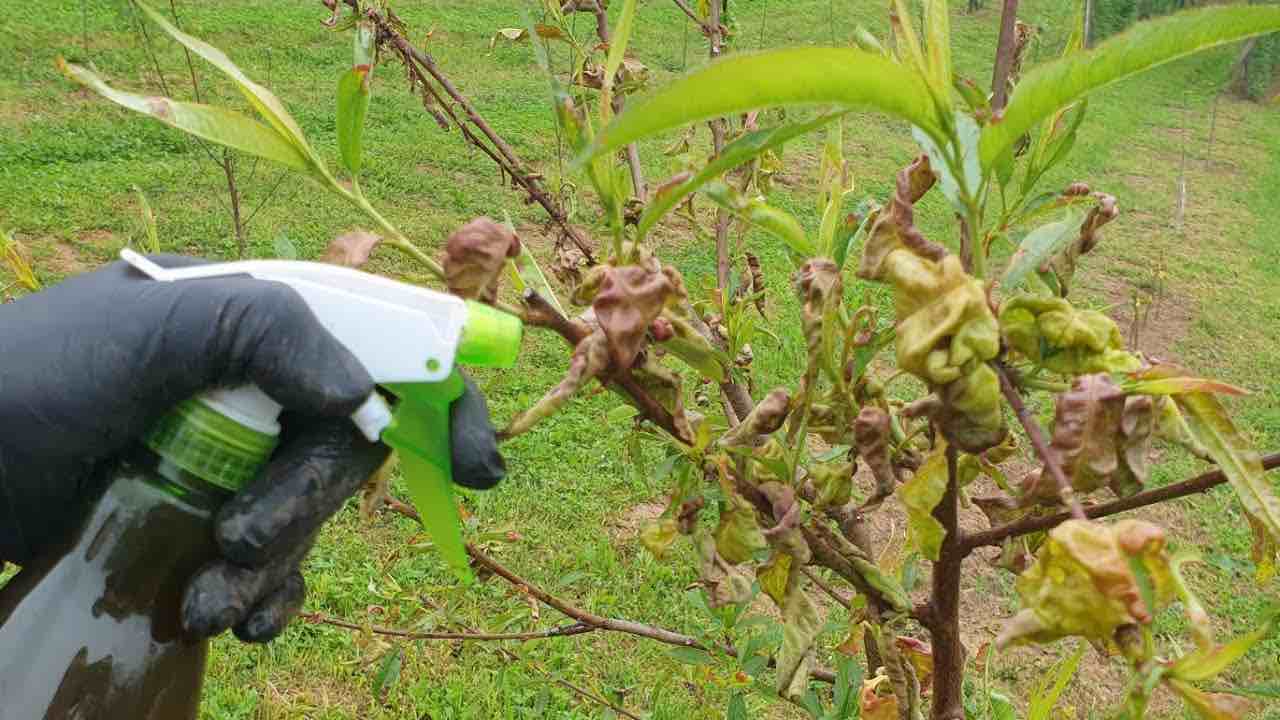
The challenge of peach leaf curl is pervasive among peach and nectarine cultivators. This fungal ailment can exert a profound impact on various facets of these tree plants, encompassing flowers, fruit, leaves, and shoots. Acquiring knowledge about peach leaf curl serves as a fundamental first step in managing and mitigating this affliction.
Identifying Peach Leaf Curl
Recognizing peach leaf curl is a straightforward task that doesn’t necessitate specialized expertise. It specifically targets peach and nectarine trees, facilitating its distinction from other tree diseases. Despite its apparent simplicity, it ranks among the most insidious diseases that can befall your peach tree. Typically manifesting in spring when temperatures are low and rainfall is abundant, the signs include:
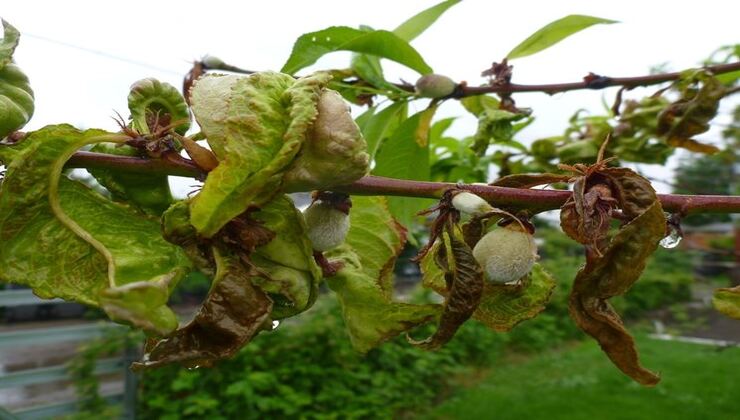
- Unusually Thick and Curled Leaves:
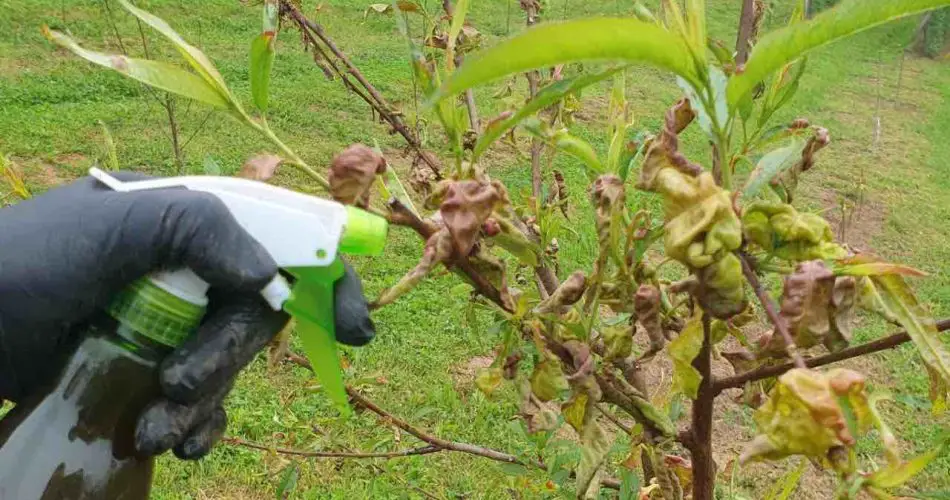
- As new peach leaves emerge, they exhibit abnormal thickness and gradually curl, eventually adopting a crinkled appearance.
- Blisters on Leaves:
- Blisters appear on the leaves, initially yellow or reddish before transitioning to a white hue.
- Leaf Discoloration:
- Over time, the entire leaf may assume various shades and develop a whitish coating.
- Worsening in Summer:
- During early summer, affected leaves worsen, darkening, shrinking in size, and ultimately falling off the tree.
- Fruit Deformities:
- If fruit is produced, it tends to be deformed and covered in blemishes, potentially dropping prematurely.
Symptoms of Peach Leaf Curl
Symptoms typically emerge within two weeks of foliar emergence, involving leaf curling and a change in color, ranging from yellow to purple. Reddish warts may appear on the leaves, leading to deformities. Advanced stages may witness gray leaves with a powdery texture. Fruit may also develop wart-like growths, causing distress and premature dropping.
Efective Treatment
While treating peach leaf curl after symptoms manifest is often futile, prevention is straightforward. To halt peach leaf curl, apply fungicide spray during fall after leaf drop or just before spring budding.
Usually, one autumn treatment suffices, but regions prone to humid weather may necessitate additional spring treatments. Fungicides are crucial after rainfall, especially when spores are carried into buds. Stationary copper products, labeled as Metallic Copper Equivalent (MCE), are potent and safe fungicides for home gardeners. The MCE classification indicates the fungicide’s strength, with higher scores signifying greater efficacy. Optimal choices include copper products with higher MCE scores, while lime sulfur and copper sulfate are less effective alternatives.