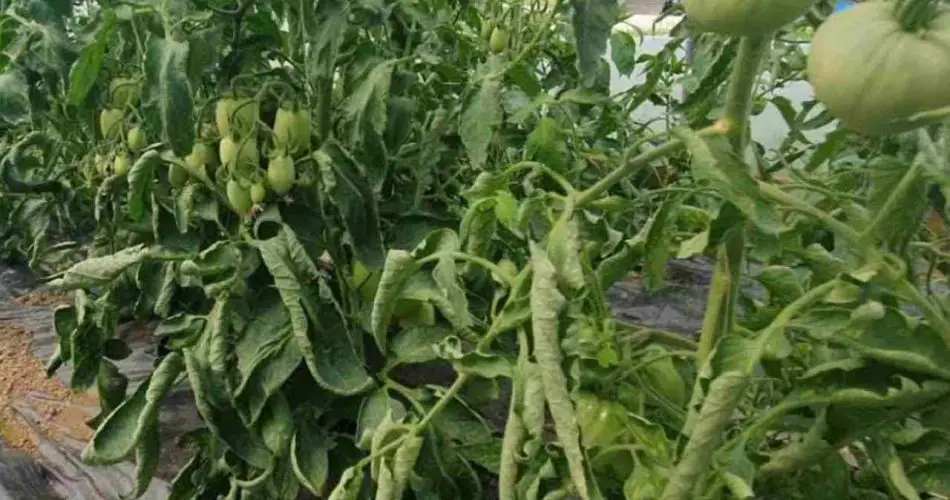
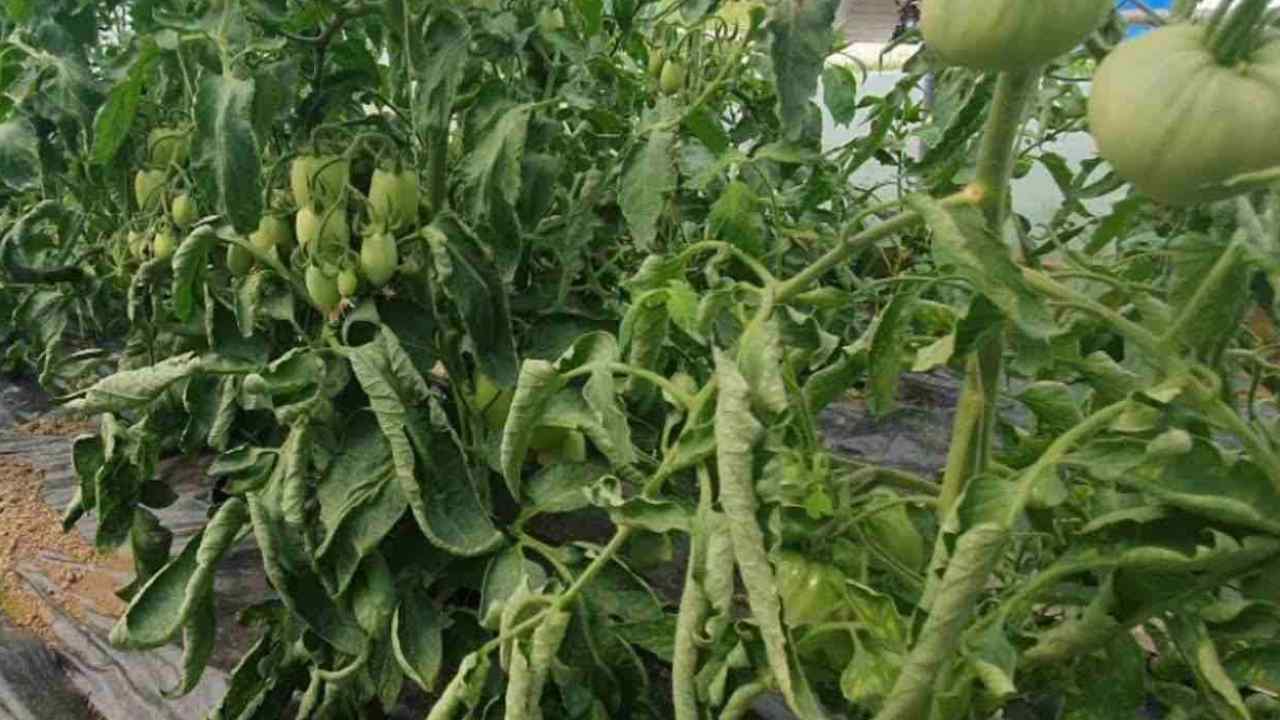
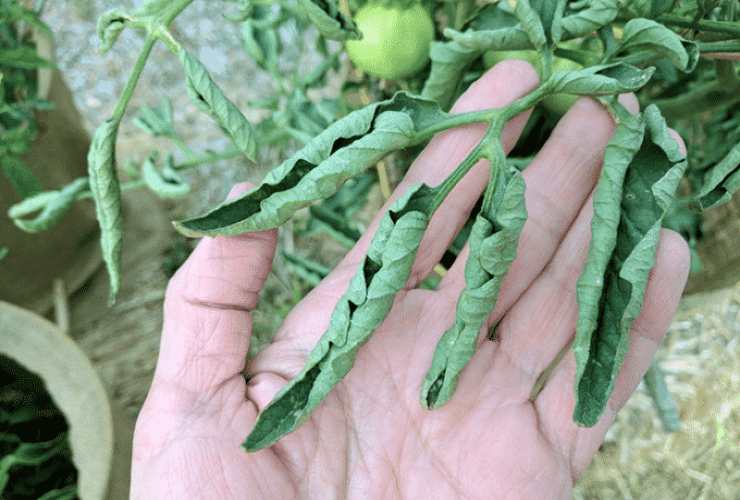
Ever wondered about the peculiar phenomenon of twisted tomato leaves in your garden? Today, we’ll unravel the true culprit behind it.
Whether you cultivate tomatoes in a small vegetable plot, garden, or even on your balcony, the challenge lies not just in proper irrigation but also in providing the right nutrients. Contrary to belief, tomatoes thrive beyond traditional gardens and can flourish on your balcony with the right care.
To cultivate robust tomato plants, remember these key guidelines:
- Hydration is key: Water your tomato plants multiple times a day in summer and once daily in spring.
- Chase the sun: Tomatoes need ample sunlight to flourish, so position them to bask in the sun’s rays.
- Nutrient infusion: Fertilize your tomato plants at least bi-weekly for rapid growth and fruitful outcomes.
- Deep-rooted success: Ensure proper planting depth for strong root development and optimal nutrient absorption.
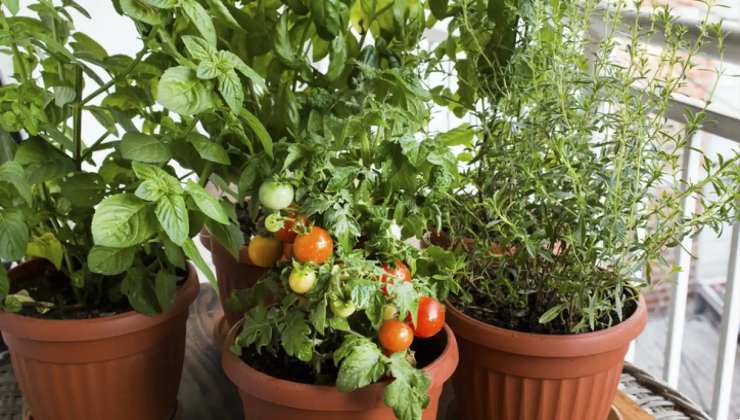
Now, let’s address a common issue—twisted tomato leaves. The primary culprit behind this curious occurrence is the notorious white mite.
White mites, though nearly invisible to the naked eye, wreak havoc on your tomato plants by laying microscopic eggs on the leaf undersides. Feeding on the leaves and transmitting diseases through their bites, these pests induce leaf twisting.
To combat this issue:
- Acaricide intervention: If you suspect an infestation, use acaricide promptly to prevent plant demise.
- Baking soda remedy: Mix 2 tablespoons of baking soda with 300 ml of room temperature water, pour it into a sprayer, and apply it to the leaves. Use a cotton pad soaked in this solution to remove mites and eggs.
Other factors contributing to twisted tomato leaves include:
- Weather fluctuations: Unstable weather, particularly high temperatures and scorching heat, can cause leaf drying and twisting as plants attempt to conserve water.
- Herbicides: Drifting herbicides from neighboring plants might affect your tomatoes. Treat affected plants with potassium and calcium supplements to mitigate damage.
- Tomato virus: This serious disease leads to rapid plant deterioration, with twisted leaves covered in a white patina. Unfortunately, the only solution is to uproot and discard the infected plant to prevent the virus from spreading to other vegetables.
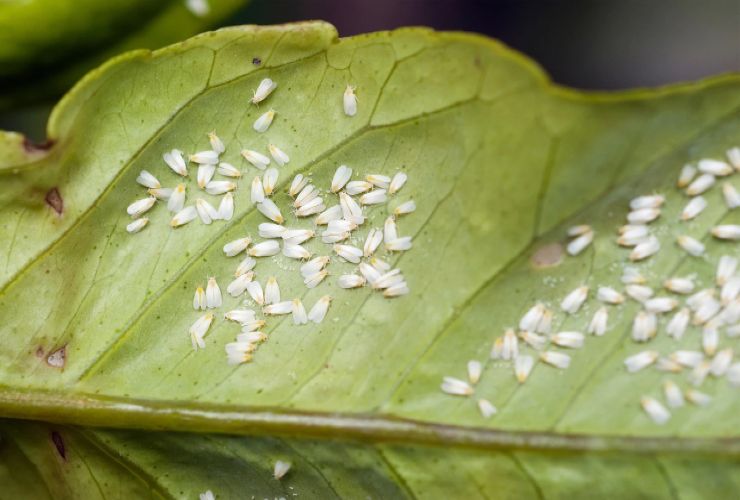
Are you familiar with it? It’s a pest that poses a significant threat to your tomato plants. White mites, nearly microscopic and barely visible to the naked eye, inflict substantial harm on your plants.
These pests lay minuscule eggs beneath the leaves, avoiding light as they feed on the tomato plant’s foliage. Through their bites, they transmit perilous diseases and toxins, causing the leaves to contort.
How can you tackle this issue? If you suspect an ongoing infestation, the most effective approach is to use an acaricide to prevent the plant from perishing. Following that, conduct a leaf wash using a water and baking soda mixture.
To prepare the solution, combine 2 tablespoons of baking soda with 300 ml of room temperature water. Transfer the mixture into a sprayer and apply it to the leaves. Ensure the removal of white mites and eggs by gently rubbing the tomato leaves with a cotton pad soaked in the water and baking soda mixture. Your plant should show signs of recovery within a few days.
However, there are alternative factors that may cause tomato leaves to curl. Unstable weather, such as high temperatures and scorching heat, can induce this phenomenon. The plant responds by drying out and twisting to protect itself from further water loss.
Additionally, herbicides can also trigger curled tomato leaves. We’re not necessarily referring to your herbicides (assuming your ecological responsibility), but those used by a neighbor to control pests and weeds in their plants.
Ensure the health of your tomato plants by following these suggestions diligently. Understanding and addressing these potential issues will contribute to a thriving tomato harvest.