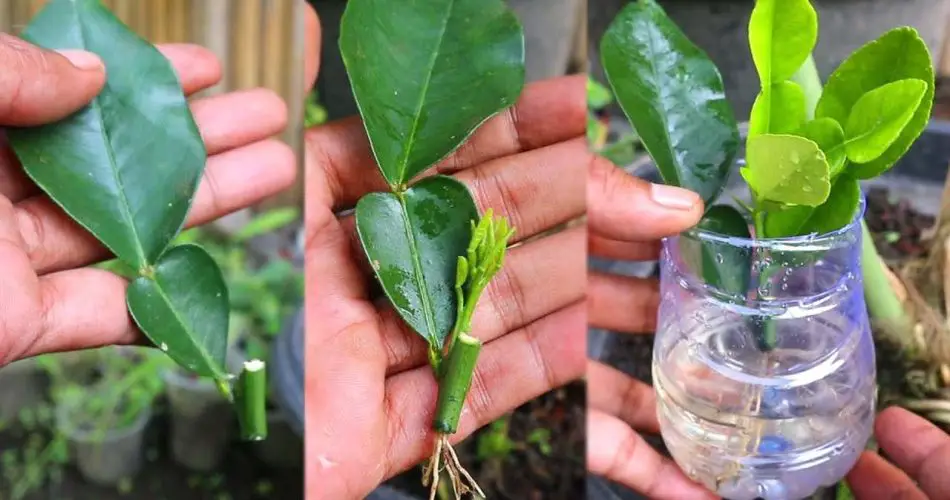
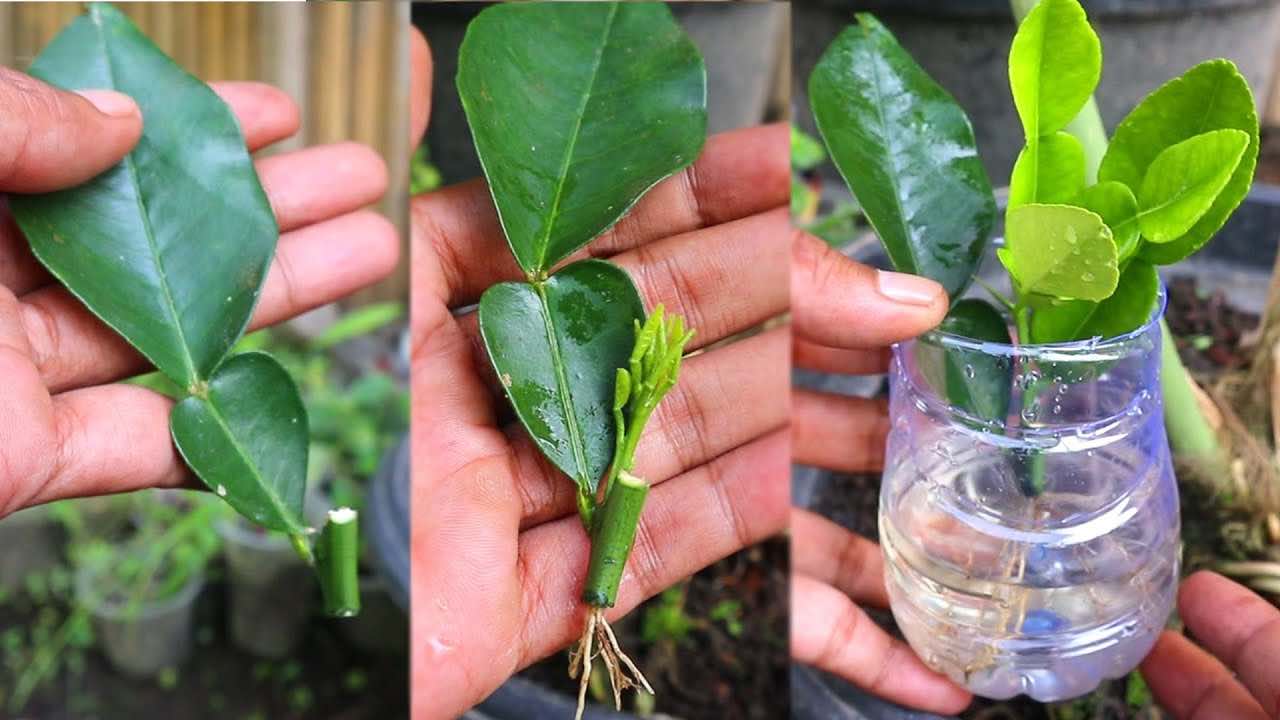
Follow these steps, and you’ll be able to cultivate new lemon plants from leaf cuttings using this method.
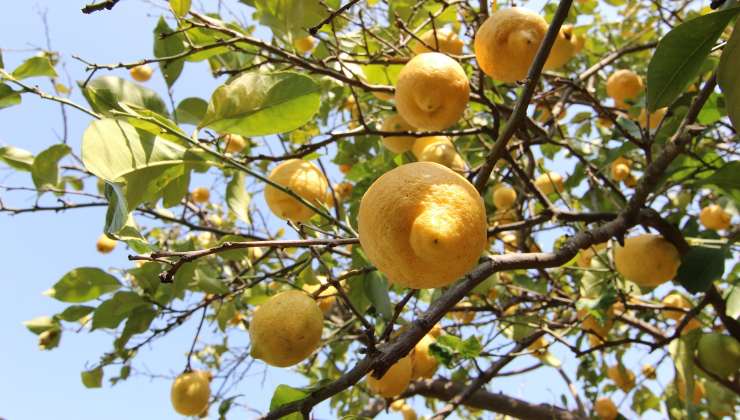
The lemon tree is indigenous to India, belonging to the evergreen plant species scientifically known as Citrus limon. Unlike some other citrus fruits, this plant has the unique ability to produce flowers and fruits multiple times throughout the year, resulting in different harvests of lemons at various times.
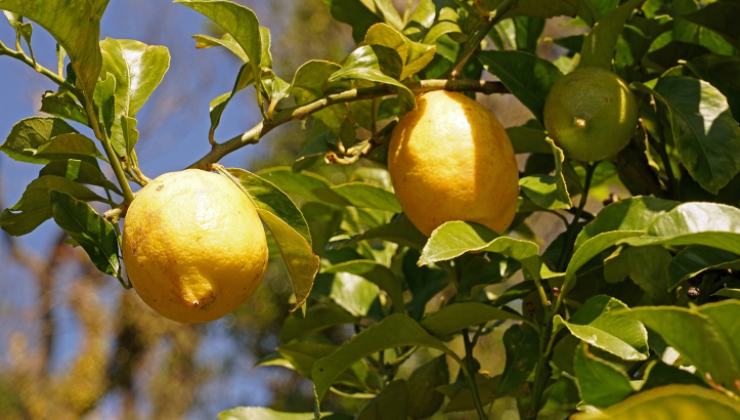
Typically, lemons have an elliptical shape and are characterized by a vibrant yellow color. They possess a pointed tip, also known as an “umbone,” and are widely utilized in various culinary applications, ranging from simple salads to more intricate preparations. The lemon peel is notably thick and contains abundant glands filled with highly aromatic oils.
Here’s the process for cultivating new lemons from leaf cuttings.
As mentioned, we’ll now explore how to create a lemon plant solely from a leaf cutting. This cutting method is widely employed and deemed very reliable for propagation. Unlike sowing, it significantly reduces the time required. Planting seeds can be a lengthier and sometimes less effective process.
Opting for cuttings means obtaining a plant identical to the mother plant from which the cutting branch was derived. Begin by obtaining a lemon branch, preferably around March during the pruning season for this citrus plant. The branch should still be green and approximately 20 centimeters in length.
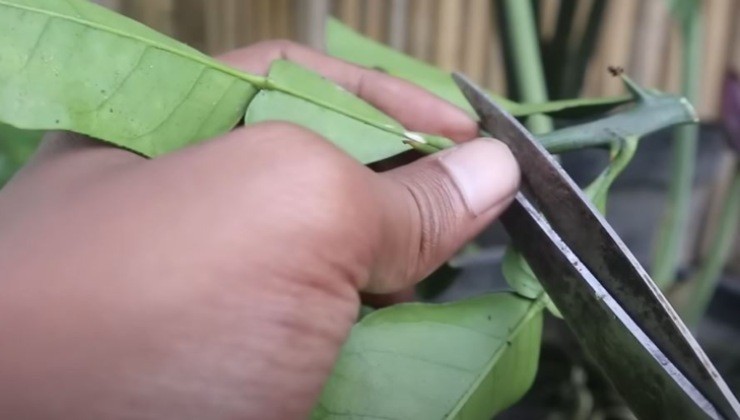
Next, check if the lemon branch has multiple buds, and before making the cut, ensure thorough disinfection of the knife to be used. The cut should be made at a slight angle. Subsequently, take a plastic bottle, cut approximately 12 centimeters from the bottom, and fill it with water. Proceed to disinfect the cutting site with a garlic clove before placing it in the water.
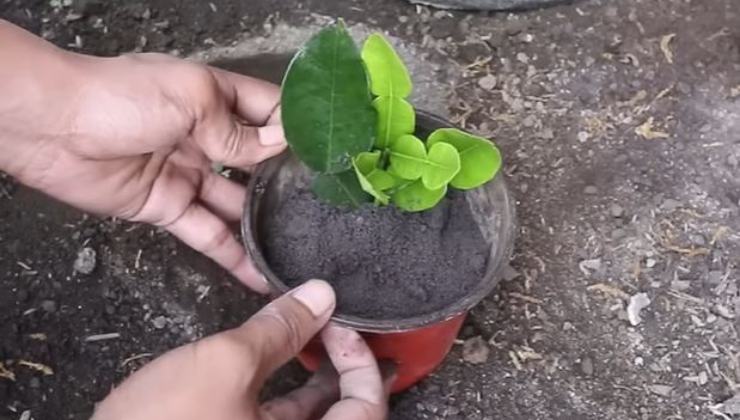
Select a pot filled with moist soil and create a reasonably large hole in the center where you’ll position the cutting along with its roots. Over time, the plant will continue to grow, gradually expanding in size. However, it’s crucial to provide the right care and attention.
Ensure proper care, especially during the initial stages, as a small seedling requires accurate treatment. Below, we’ll offer you some tips for nurturing the plant. Additionally, remember to change pots when the plant starts to outgrow its current one, typically after about a year.
In the initial years of its life, essential factors to monitor include irrigation and mulching. Adequate water is crucial, as lemons have a high water requirement, ranging from 20 to 60 m3. This necessity is particularly significant during the flowering and fruit-setting phases, emphasizing the importance of never allowing the lemon plant to go without water.
Mulching, on the other hand, proves highly beneficial, particularly in the initial years. It involves shielding the root system from the proliferation of wild herbs. These unwanted plants could potentially compete with the lemon tree for water and nutrients, leading to potential harm. To address this, you can apply a layer of straw and bark with the inclusion of natural fertilizer underneath.