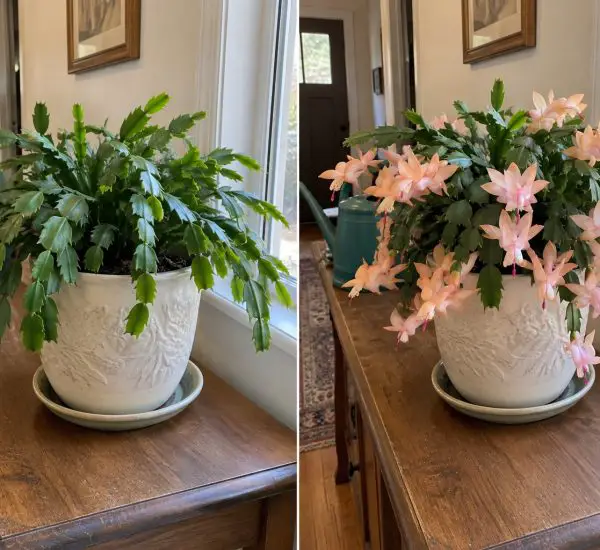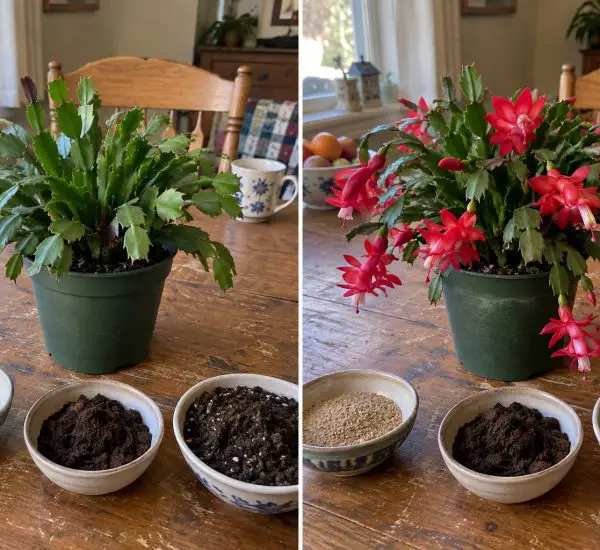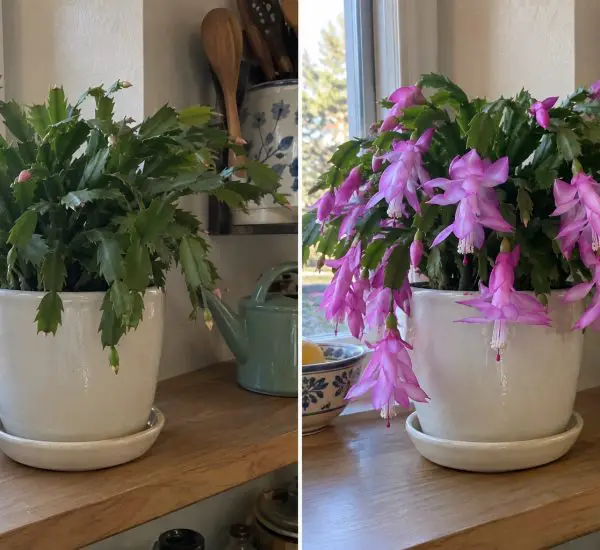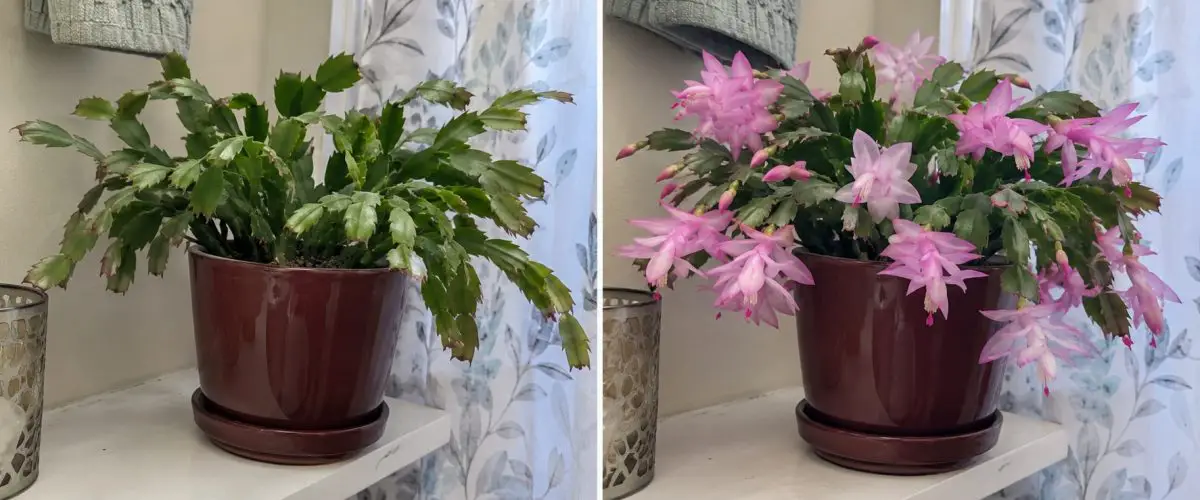
The Christmas cactus is prized indoors for its attractive pink or lilac flowers. Sometimes called Easter cactus, it is known scientifically as Schlumbergera. Its colorful display has made it a popular houseplant, especially for those who enjoy the sight of blossoms among their indoor plants.
Unlike desert cacti, it does not come from a hot, dry landscape. This plant and its nearest relatives are native to Brazil’s tropical forests. There, they grow on trees and absorb moisture. Thinking about that natural setting helps explain why a humid environment is part of the care described below.
Choosing the Pot and Position
A drainage hole is essential when choosing the pot in which to plant your Christmas cactus. It helps prevent the soil from becoming excessively moist. Look for a container that allows surplus water to escape, instead of leaving it inside the growing medium.
You can use any type of succulent potting soil. A corner with plenty of indirect light is a suitable position, even in the bathroom. Avoid direct sunshine: it might harm the leaves and cause them to become yellow.
The cactus prefers humidity, which is why placing it in a kitchen or bathroom is suggested. Keep its need for indirect light in mind when picking a position in one of these more humid rooms.
Watering and Pruning
Water once every two or three weeks, provided the soil at the top feels too dry. In six inches of potting soil, for example, only water when the upper three to four centimeters are dry. Use your fingers to check the surface layer before reaching for water.
When the soil is dry, give water until it begins draining out through the hole beneath the pot. Wait approximately fifteen minutes and then remove the extra water accumulated in the saucer. This last step completes the watering process.
Giving water during the flowering stage is particularly important. Prune at the end of spring to encourage branching and blooming.
The Conditions That Trigger Blooming
Autumn’s longer nights and lower temperatures set off flowering. Different types of this cactus can bloom between November and the middle of spring.
When no flowers appear, the plant is probably in too much light or an environment that is too warm. The following steps are ways to stimulate its flowering.
For at least six weeks, nights must last fourteen hours or longer, while days last eight to ten hours. If household lights remain on throughout the night, you may need to cover the pot or move the cactus to a less illuminated spot.
Buds develop best at 10°C–15°C. You can also stimulate flowers by keeping the cactus at approximately 7°C for several nights in a row. Those cooler conditions help encourage the display described here.
A cactus that loses its buds in one year should flower the next. Do not discard the plant because that particular year’s buds have dropped.
The Common Problem of Falling Flowers
Stress causes flowers to fall. Too much light, a sudden temperature shift, or excessive watering can be behind the problem. Think about these possible stresses if your cactus begins shedding its blossoms.