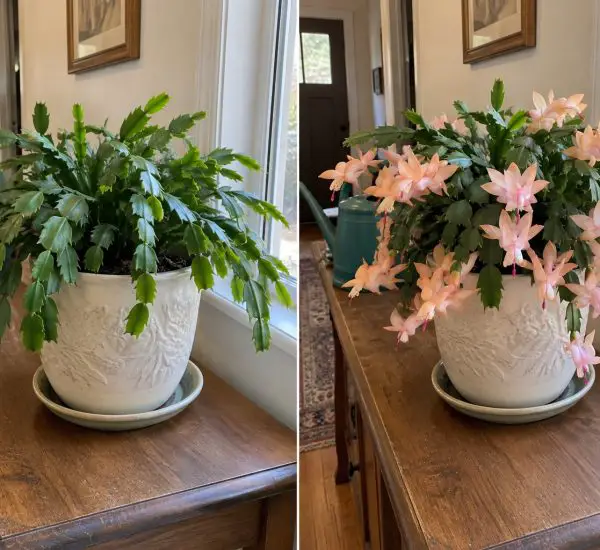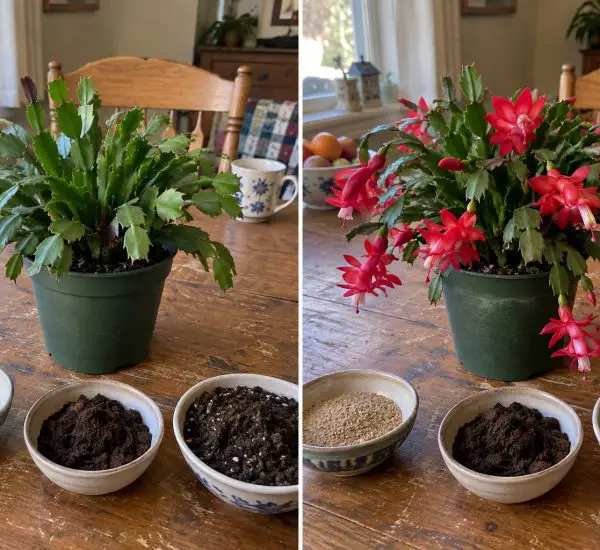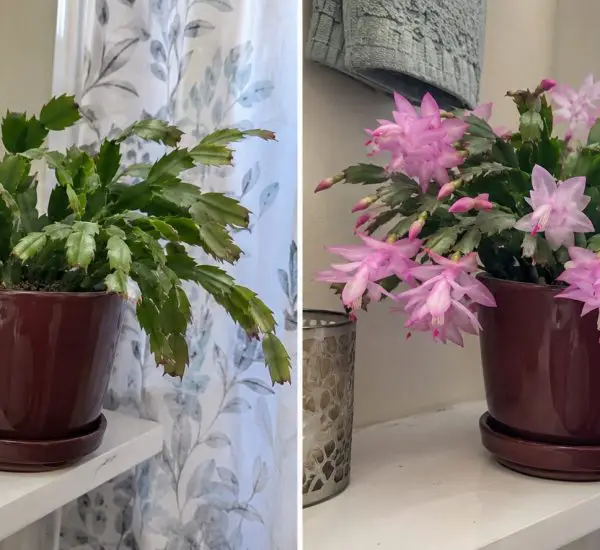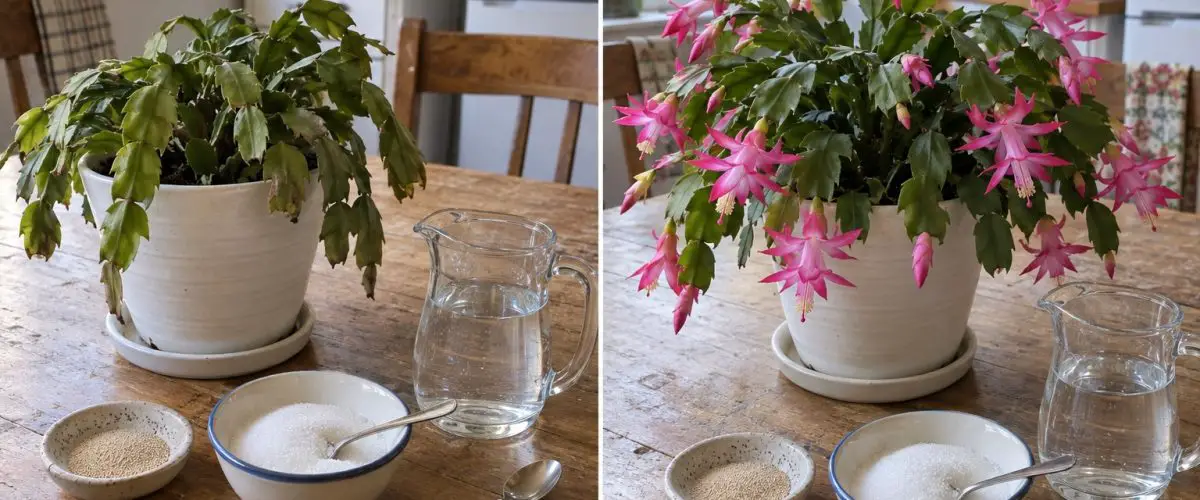
Christmas cactus is cherished for its vivid blossoms and festive winter display. Yet it is common for a plant to stop flowering, lose strength, or develop weak growth. If yours looks worn out and has missed its blooms for some time, a simple revival method can help restore it and encourage new flowers.
Even a faded Schlumbergera can respond to a little care and a proven natural approach. This routine uses an easy homemade tonic, followed by attention to the environment around the plant. Make the feeding and the care steps part of the same plan, allowing the cactus to regain its vigor while preparing for bloom.
What May Be Holding It Back
Knowing the usual causes helps you understand why a plant has become weak or stopped producing flowers.
- Insufficient light: Too much shade may stop flowering.
- Poor watering habits: Either excessive or inadequate water can stress the cactus.
- A shortage of nutrients: Old or depleted potting soil can leave the plant undernourished.
- Missing dormancy: Buds need a cool rest period to develop.
- Limited root room: An undersized pot can hold back growth and flowers.
A natural feeding treatment can revive even a sluggish plant and set the stage for a new display. It works within a broader routine that also gives attention to these care conditions.
Preparing the Natural Tonic
The mixture is easy to make from familiar kitchen ingredients. It gives the plant a feeding boost intended to support vitality, growth, and flowering.
Ingredients:
- 1 litre lukewarm water, previously left to stand.
- 1 teaspoon dry baking yeast.
- 1 tablespoon sugar.
Preparation:
- Stir the yeast and sugar into the water until dissolved.
- Allow the solution to stand for one to two hours at room temperature so mild fermentation begins.
- Mix it again before application and pour it directly onto the soil surrounding the cactus.
Beneficial nutrients, enzymes, and microbe-activating sugars in the solution help give energy to the roots and encourage flowering. The short standing period is part of preparation, so let it happen before applying the mixture.
Using It at the Right Time
- Apply once every four to six weeks while the plant is growing actively or just before flowering, generally in autumn or early winter.
- Skip treatment during the resting phase after bloom, usually February to April.
- Moisten the soil lightly before feeding; dry soil can reduce the tonic’s effectiveness.
- Use about 150–200 ml, approximately one cup, for a medium-sized cactus.
Match the treatment to the plant’s stage instead of using it continuously. Active growth and preparation for flowers are the intended times, while the post-flowering period stays a pause in the routine.
The Other Care Steps That Help
To support revival and get the best from the natural mixture, consider the plant’s everyday surroundings as well. These six areas of care work alongside the feeding rather than being separate from it.
1. Give It Filtered Brightness
Choose a bright spot with indirect light. Avoid direct midday sunshine, which can burn the segments. A gentle, well-lit position gives the cactus the light it needs without the harsh exposure that can damage its green growth.
2. Prepare for Buds With Cooler Air
For four to six weeks in autumn, provide longer nights and cooler temperatures of roughly 15–18°C. This mimics the natural dormancy that supports flower-bud formation. The seasonal change is one of the steps that helps the recovering plant get ready to bloom.
3. Keep Watering Balanced
Maintain light moisture in the potting mix without making it soggy. Let the first centimetre dry before the next watering. During dormancy, reduce water, then gradually resume more watering as new growth appears. Follow the plant’s changing stage rather than keeping every watering identical throughout the year.
4. Maintain Humidity
This cactus likes moist air. Occasional misting or a humidity tray beneath the pot helps create a humid setting. Pay particular attention during winter, when indoor air is often dry. Its surroundings matter alongside the moisture you provide in the soil.
5. Feed During Active Growth
In addition to the natural mixture, apply a balanced, water-soluble fertilizer once a month in the growing season. Dilute it by half. Keep this feeding connected to active development as another part of the care used to support the plant’s return to vigor.
6. Consider Spring Repotting
If two or three years have passed since repotting, consider refreshing the pot in spring. Choose a light cactus or succulent mix with good drainage. Roots crowded into too little space can hinder both flowering and growth, making the container part of the revival routine too.
How Recovery Should Look
Around two weeks of appropriate care and yeast-and-sugar feeding should bring the first signs of improvement.
- Foliage becomes firmer and its green color deepens.
- Fresh segments may start at the ends of stems.
- Small buds emerge in the leaf axils.
These are signs that the plant is moving toward flowering. Keep supporting it while the buds develop, until they open into the colorful blossoms that make Christmas cactus so popular.
Give a Tired Cactus Another Chance
A weak or faded Christmas cactus does not have to be a lost cause. A suitable environment, some attention, and natural nutrients can help a fragile plant recover and produce striking flowers.
This yeast-and-sugar feed is an easy, effective way to restore energy and support a fuller bloom from season to season. Combine it with the care steps and give the plant a chance to respond. Within a few weeks, fresh greenery and bright flowers may once again bring a cheerful presence into the room.